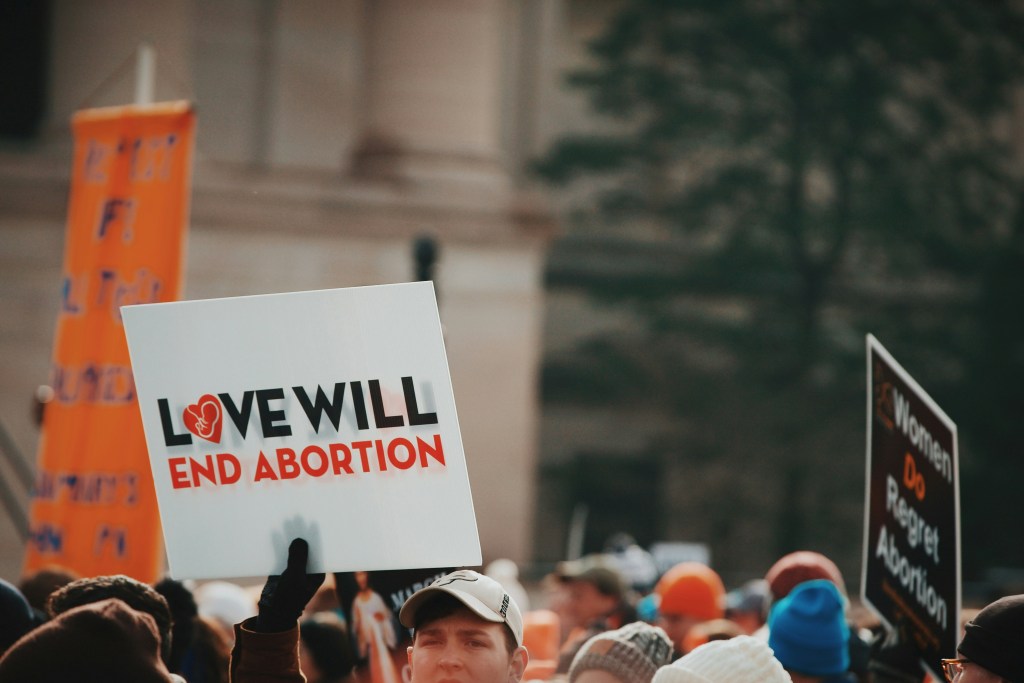
Abortion has long been one of the most debated moral issues of our time, yet for the Catholic Church, there has never been a question. From the earliest Christian writings to modern papal encyclicals, the Church has remained firm in its teaching: abortion is intrinsically evil and can never be justified. This belief is deeply rooted in the conviction that human life begins at conception and must be protected at all costs.
The Catechism of the Catholic Church states unequivocally:
“Since the first century, the Church has affirmed the moral evil of every procured abortion. This teaching has not changed and remains unchangeable. Direct abortion, that is, abortion willed either as an end or a means, is gravely contrary to the moral law.” (CCC 2271)
This doctrine has remained consistent throughout history. One of the earliest Christian writings, the Didache(1st century), explicitly commands:
“You shall not kill the embryo by abortion and shall not cause the newborn to perish.” (Didache 2:2)
Similarly, the Letter of Barnabas (c. 74 AD) affirms:
“You shall not slay the child by procuring an abortion; nor, again, shall you destroy it after it is born.” (Letter of Barnabas 19:5)
In the fourth century, St. Basil the Great reinforced this teaching:
“A woman who deliberately destroys a fetus is answerable for murder. And any fine distinction between its being completely formed or unformed is not admissible among us.” (Letter 188:2)
The Church’s position remained firm through the centuries. The Council of Elvira (c. 306 AD) ruled that a woman who procures an abortion should be denied Communion even at death (Canon 63).
In the Middle Ages, St. Thomas Aquinas stated:
“He who strikes a woman with child does something unlawful; wherefore if there results the death either of the woman or of the animated fetus, he will not be excused from homicide.” (Summa Theologiae II-II, q. 64, a. 8)
By the sixteenth century, Pope Sixtus V in Effraenatam (1588) explicitly condemned abortion at any stage, reinforcing the penalties against it.
In modern times, Pope St. John Paul II issued a solemn declaration in Evangelium Vitae (1995):
“By the authority which Christ conferred upon Peter and his Successors, I declare that direct abortion, that is, abortion willed as an end or as a means, always constitutes a grave moral disorder.” (EV 62)
The Second Vatican Council reaffirmed this in Gaudium et Spes (1965), stating:
“From the moment of conception, life must be guarded with the greatest care; abortion and infanticide are abominable crimes.” (GS 51)
The 1983 Code of Canon Law upholds this with Canon 1398, which decrees:
“A person who procures a completed abortion incurs a latae sententiae excommunication.”
This means that anyone who knowingly and deliberately commits abortion is automatically excommunicated from the Church.
While the Catholic Church’s opposition to abortion is rooted in divine law and moral reasoning, many secular arguments also demonstrate why abortion is fundamentally wrong. Even from a non-religious perspective, abortion raises serious scientific, philosophical, and human rights concerns.
One of the strongest secular arguments against abortion comes from biology. It is an indisputable scientific fact that human life begins at conception. From the moment of fertilization, a unique, living human organism with its own DNA is formed. The only differences between an embryo and a fully grown adult are size, level of development, environment, and degree of dependency (SLED argument)—none of which justify killing a human being. If we claim that smaller, less developed, or dependent individuals can be killed, then infants, the disabled, and the elderly would also lose their right to life.
Another argument is philosophical consistency. Society rightly condemns infanticide and violence against newborns, yet abortion permits the killing of an equally innocent human being simply because they are unborn. If killing a newborn one minute after birth is wrong, why is it acceptable one minute before birth—or weeks before? The only difference is location. This contradiction reveals the arbitrary nature of abortion laws.
From a human rights perspective, abortion violates the most fundamental right of all—the right to life. If human rights are based on being human rather than on capabilities, then all humans, including the unborn, deserve legal protection. The same arguments that have historically been used to justify slavery, genocide, and discrimination—dehumanization and the denial of personhood—are now being used against the unborn. Just as past injustices were eventually recognized and abolished, many believe that abortion will one day be viewed as a grave human rights violation.
Additionally, there are psychological and societal consequences to abortion. Studies have shown that many women suffer from post-abortion syndrome, experiencing guilt, depression, and regret. Abortion is also disproportionately used against female fetuses in some cultures, reinforcing gender discrimination. Furthermore, legalized abortion can lead to eugenic practices, where individuals with disabilities or unwanted traits are selectively terminated, violating the dignity of all human beings.
Despite the absolute prohibition of direct abortion, the Church recognizes that there are rare cases where a medical procedure necessary to save the mother’s life may result in the unintended loss of the unborn child. In such cases, the principle of double effect applies. This principle states that an action with both good and bad effects can be morally permissible if the bad effect is not intended, even though it is foreseen.
The Ethical and Religious Directives for Catholic Health Care Services (ERD, USCCB) explain:
“Operations, treatments, and medications that have as their direct purpose the cure of a proportionately serious pathological condition of a pregnant woman are permitted when they cannot be safely postponed until after the child is born, even if they will result in the death of the unborn child.” (Directive 47)
For instance, if a pregnant woman has an ectopic pregnancy, where the embryo implants in the Fallopian tube, doctors may remove the damaged tube (salpingectomy) to save the mother’s life. The child’s death is not the goal but a foreseen, unintended consequence. Similarly, if a pregnant woman develops aggressive uterine cancer, a hysterectomy may be morally permissible because its purpose is to remove the diseased uterus, not to end the pregnancy.
In today’s world, where abortion is often framed as a matter of personal choice or women’s rights, the Church remains a prophetic voice that defends the dignity of all human life, both mother and child. But even without religion, the case against abortion is clear: science, human rights, philosophy, and ethics all affirm that the unborn child is a distinct and valuable human being deserving of protection.
True compassion does not eliminate the most vulnerable but seeks solutions that uphold the dignity of all. The pro-life position is not merely a theological belief but a commitment to justice. One day, society may fully recognize abortion for what it is—a grave injustice against the most innocent members of humanity.




 The Rosary Dad
Leave a comment