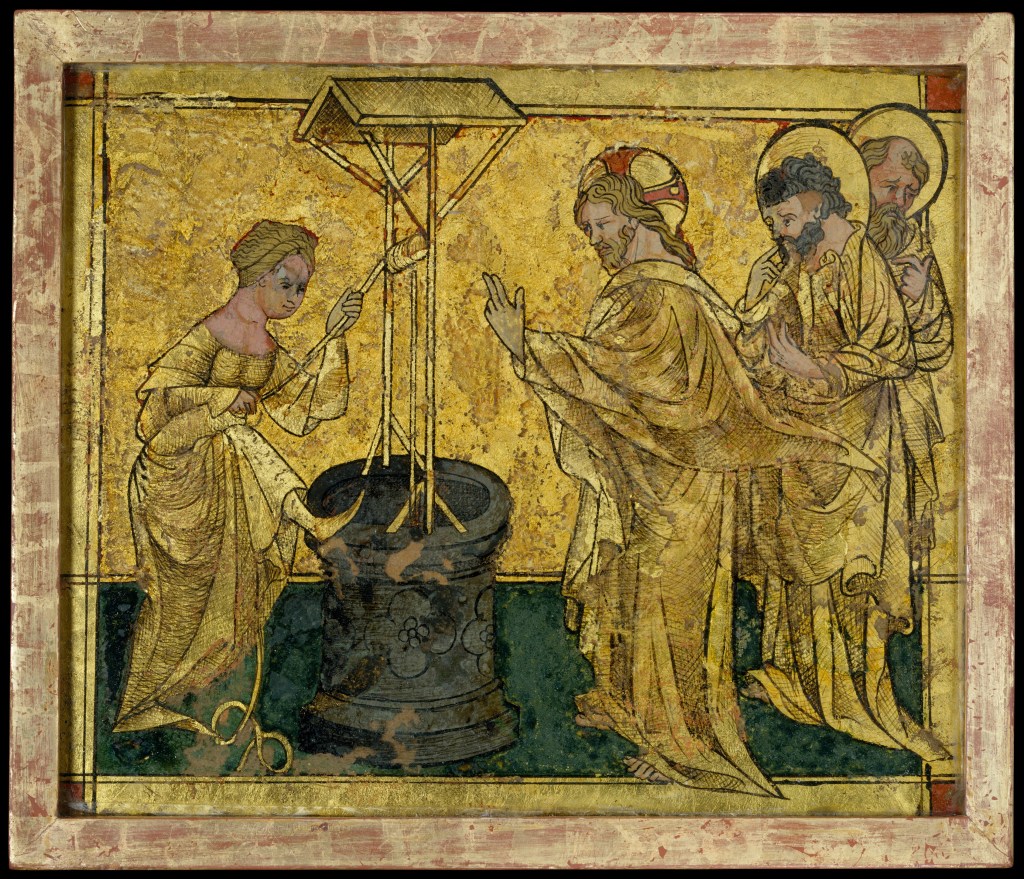
During mindless scrolling on Facebook, I found a page that says, “God is spirit, and we must worship in spirit and truth.” The post is referring to the Bible verse John 4:24, where Jesus tells the Samaritan woman at the well, “God is spirit, and his worshipers must worship in the Spirit and in truth.” The comment section was filled with comments like, “Yes, we don’t need idol worship,” as if statues in the Church are equated with worshipping idols by Catholics. I stopped and thought about it for a moment. Why did this resonate with so many? And what does it really mean to worship in spirit and truth?
As I reflected, I realized that this verse has often been used to argue against the use of images or statues in worship. The idea is that since God is spirit, worship should be entirely internal and spiritual, without the need for external aids like icons or religious images. But is that really the essence of what Jesus was teaching? Or is there a deeper meaning that we should consider? To understand the meaning of “worship in spirit and truth,” it’s important to take a look at the full context of Jesus’ conversation with the Samaritan woman. In John 4:1-26, Jesus and the woman have a profound dialogue at a well in Samaria. She asks Jesus about the right place of worship—whether it’s on Mount Gerizim, as the Samaritans believe, or in Jerusalem, as the Jews hold. Jesus responds by saying that the time is coming when true worship will not be about a specific place, but about how one worships. Jesus emphasizes that worship is about an internal, spiritual connection with God: “God is spirit, and his worshipers must worship in the Spirit and in truth” (John 4:24). This indicates that worship should not be bound by external locations or rituals but must come from a sincere, truthful relationship with God.
When Jesus says we must worship “in spirit,” He is urging us to move beyond superficial worship. It’s not about where we are or what we are physically doing, but about the state of our hearts. True worship comes from the inner transformation that the Holy Spirit brings in us. Worshiping in spirit means that our hearts, minds, and souls are fully engaged in glorifying God. It’s not about checking off a box on a list of religious duties, but about connecting deeply with the Creator who dwells in us. To worship “in truth” means that our worship should be grounded in the truth of God’s revelation. This includes worship that aligns with God’s Word and the truths revealed in Scripture. Worship is not about creating our own versions of God, but about acknowledging God for who He truly is. In Christian theology, this truth is centered on Jesus Christ, who is the way, the truth, and the life (John 14:6). So, worshiping in truth means acknowledging the fullness of God’s revelation in Jesus Christ.
Worshiping in truth also means worshiping God according to the truth He has revealed to His people, including how to worship Him. God doesn’t leave us to figure out how to approach Him on our own; He has provided clear instructions throughout Scripture. This includes the commandments, the liturgical practices established in the Old Testament, and the example set by Jesus in the New Testament. How we worship is as important as the sincerity of our hearts. For example, Christians are called to partake in the Eucharist, just as Jesus instituted it at the Last Supper. The Church also teaches that worship should involve prayer, Scripture, and communal gatherings. These practices are rooted in the truth of God’s will, as revealed through Scripture and the Church’s teaching.
Now, you may be wondering how this fits into the question of images or statues in worship, especially in the Catholic Church. Many people who see this verse often argue that the use of images is unnecessary and even idolatrous. But is this really what Jesus meant when He spoke to the Samaritan woman? The Catholic Church doesn’t teach that statues and images are to be worshipped as gods. Instead, they are seen as tools to help the faithful focus their minds and hearts on God. The Church has long maintained that veneration of images (such as statues of saints or depictions of Christ) is not the same as idolatry. The key difference is that veneration is the honor given to the person represented by the image, not the image itself. The veneration of saints or icons is meant to point us to the deeper truths of our faith, reminding us of God’s work in the lives of others. In fact, the Second Council of Nicaea (787 AD) affirmed the use of images in worship as a way to help believers engage more fully with the mysteries of the faith. As Catholics, we believe that just as God became visible in the person of Jesus Christ, images can help us reflect on the visible reality of God’s work in our lives and in salvation history.
It’s also important to note that Jesus’ call to worship “in spirit and in truth” is not a rejection of communal worship or external acts of worship altogether. While private, personal devotion is essential, the New Testament shows us that Christians are called to gather together in worship as well. In Hebrews 10:24-25, we’re encouraged not to neglect meeting together as a community but to spur one another on toward love and good deeds. Worshiping in spirit and truth doesn’t mean that the physical elements of worship—such as the Eucharist, prayer, and the communal aspect of the Church—are unimportant. Rather, it means that these actions should be done with sincerity, faith, and alignment with God’s revealed truth.
So, what did I learn from this? The verse from John 4:24 calls us to worship God in a way that transcends mere external practices or physical locations. It invites us into a deep, personal, and truthful relationship with God, led by the Holy Spirit. At the same time, this does not eliminate the role of the Church, the sacraments, or even images in worship. These are simply aids to help us focus on the divine and enter more fully into worship. Ultimately, worshiping in spirit and truth is about the condition of our hearts, the sincerity of our devotion, and our alignment with God’s revelation in Christ. It’s not about being free from all external forms of worship, but about making sure that our worship—whether in private or in community—is rooted in truth and offered with a spirit that seeks to honor God.






 The Rosary Dad
Leave a comment