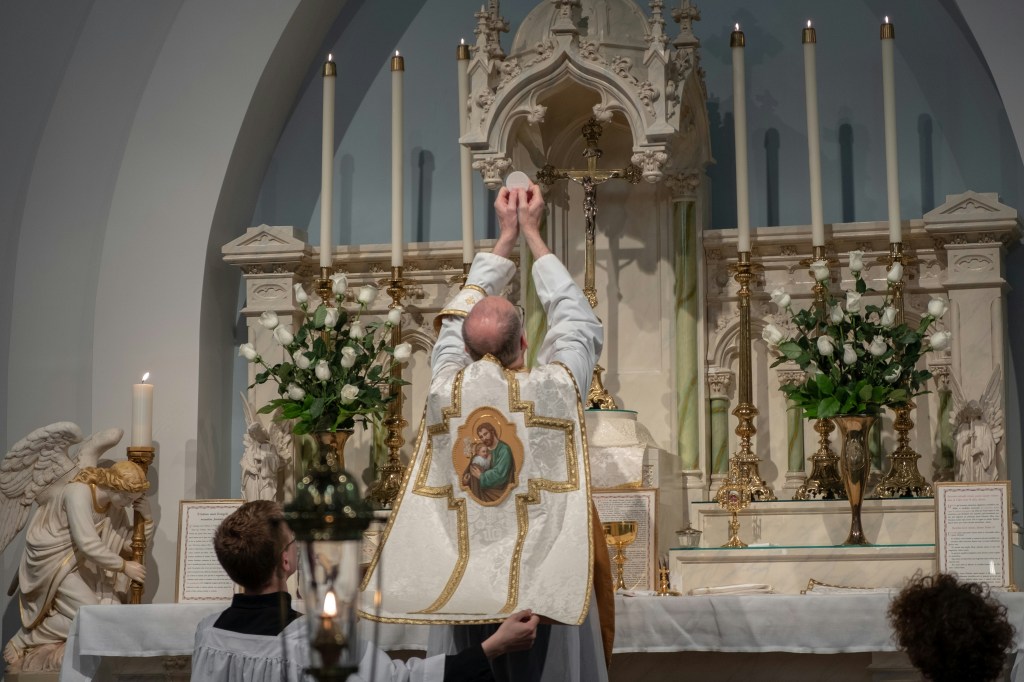
Let us all renew our devotion to the Eucharist, remembering that it is not just a symbol but the real presence of Jesus Christ. Each reception brings us closer to the One who loves us beyond measure and calls us to eternal life.
The Eucharist, the very heart of the Catholic faith, is often called the source and summit of Christian life (Lumen Gentium, §11). It is the moment when Jesus Christ, in His body, blood, soul, and divinity, becomes present to us, offering spiritual nourishment, unity, and sanctification. But receiving this profound gift calls for preparation, reverence, and a deep understanding of its significance.
In this blog, we will explore the teachings of the Church regarding the reception of Holy Communion, including its requirements, the importance of preparation, and the spiritual fruits it brings to our lives.
1. How Often Are Catholics Required to Receive Holy Communion?
The Church requires Catholics to receive Holy Communion at least once a year, during the Easter season. This is known as the Easter Duty and is one of the Precepts of the Church, which establish the minimum requirements for a Catholic to grow in love of God and neighbor.
While this is the minimum obligation, the Church strongly encourages frequent reception of the Eucharist—even daily—for those who are properly disposed. Receiving the Eucharist frequently deepens our union with Christ and provides the grace we need to live a holy life.
2. Why Not Receive Daily?
If a Catholic is in a state of grace (free from mortal sin), there is no reason not to receive the Eucharist daily. In fact, the Church desires that the faithful participate in the daily sacrifice of the Mass and receive the Eucharist whenever possible.
However, some reasons people may choose not to receive include:
• Feeling unprepared: They may feel distracted or spiritually unfocused.
• Not having observed the Eucharistic fast: The Church requires abstaining from food and drink (except water and medicine) for at least one hour before receiving Communion.
• Being in a state of mortal sin: If someone has committed a grave sin, they must go to confession first before receiving the Eucharist.
Reflection: Daily reception of the Eucharist is not just a routine act; it is a profound encounter with Jesus. The decision to receive should be guided by prayerful preparation and a desire for deeper communion with Him.
3. Attending Mass Without Receiving the Eucharist
It is entirely acceptable to attend Mass without receiving the Eucharist. Catholics are still participating in the sacred liturgy, which has infinite value, even if they do not approach the altar for Communion.
For those unable to receive, the Church encourages making a spiritual communion. This is a prayer expressing a desire to unite with Christ spiritually when sacramental Communion is not possible.
How to Make a Spiritual Communion:
Simply say a prayer such as:
“My Jesus, I believe that You are present in the Most Holy Sacrament. I love You above all things, and I desire to receive You into my soul. Since I cannot at this moment receive You sacramentally, come at least spiritually into my heart. I embrace You as if You were already there and unite myself wholly to You. Never permit me to be separated from You. Amen.”
Reflection: Spiritual communion reminds us that the Eucharist is not just about the physical act of reception but about a deep desire for union with Christ, whether sacramental or spiritual.
4. The Eucharist and Mortal Sin
Receiving the Eucharist requires that we be in a state of grace. The Church teaches that to receive while in a state of mortal sin is itself a grave sin (Catechism of the Catholic Church, §1385).
Mortal sin involves three conditions:
1. Grave matter: The act is serious (e.g., theft, adultery).
2. Full knowledge: The person knows it is gravely wrong.
3. Deliberate consent: The person freely chooses to commit the act.
If someone is aware of being in mortal sin, they must go to confession before receiving the Eucharist. However, the Eucharist does forgive venial sins and strengthens us against temptation.
Reflection: The sacrament of confession and the Eucharist work together to heal and sustain us. Confession cleanses the soul, while the Eucharist nourishes and strengthens it.
5. The Spiritual Fruits of Receiving the Eucharist
Frequent and worthy reception of the Eucharist brings countless spiritual benefits, including:
• Deepening union with Christ: Through Communion, we become one with Christ and participate in His divine life.
• Forgiveness of venial sins: The Eucharist wipes away minor sins and renews our commitment to God.
• Strength against temptation: It provides spiritual fortitude to resist sin and grow in virtue.
• Unity with the Church: Receiving the Eucharist unites us more closely with the Church, the Body of Christ.
St. John Chrysostom beautifully expressed this truth:
“Let us return from [the altar] like lions breathing fire, having become terrible to the devil.”
Reflection: The Eucharist is not just a personal encounter with Christ but a communal act that strengthens the Church as a whole. Every time we receive, we are empowered to live out our faith in the world.
6. Theological Reflections on the Eucharist
The Eucharist is a mystery of love. It is the fulfillment of Christ’s promise:
“I am the bread of life; whoever comes to me will never hunger, and whoever believes in me will never thirst” (John 6:35).
In the Eucharist, Christ gives us His very self, offering a foretaste of eternal life. This sacrament calls us to live in alignment with Him, to seek holiness, and to share His love with others.
As St. Augustine said:
“Behold what you are. Become what you receive.”
These words remind us that receiving the Eucharist is not an isolated act but a call to transformation. Through the Eucharist, we are strengthened to live as Christ’s hands and feet in the world.
A Call to Deeper Communion
The Eucharist is the greatest treasure of the Church, a gift that nourishes, heals, and sanctifies us. Whether you receive the Eucharist daily, weekly, or during your Easter Duty, approach it with reverence, gratitude, and love.
If you are ever unable to receive, trust in God’s mercy and make a spiritual communion. The Church exists to guide us closer to Christ, inviting us to deepen our relationship with Him through the sacraments.
Let us all renew our devotion to the Eucharist, remembering that it is not just a symbol but the real presence of Jesus Christ. Each reception brings us closer to the One who loves us beyond measure and calls us to eternal life.




 The Rosary Dad
Leave a comment